Showing posts with label tech_news. Show all posts

Monday, June 22, 2015

, , , , , ,

Microsoft Can't Decide If It's Giving Away Windows 10 For Free


In an announcement on Friday, Microsoft dropped the unusually generous news that it is giving away free copies of Windows 10 to anyone who participates in the beta Insider Program for Redmond's latest OS. Sound a little too good to be true? You bet.
As noted by Ars Technica, Microsoft has since sneakily updated its blog post announcing the move, changing some crucial language:
Previously it said that signed up members of the Insider Program running a preview version would "receive the Windows 10 final release build and remain activated." Now it says only that they will "receive the Windows 10 final release build."
Moreover, Microsoft added some clarifying language, saying that "It's important to note that only people running Genuine Windows 7 or Windows 8.1 can upgrade to Windows 10 as part of the free upgrade offer."
Seems pretty clear, then: only users upgrading from Windows 7 or 8 will get a free upgrade, which is in line with Microsoft's previous announcements.
But that's not all! On Twitter this evening, Microsoft exec Gabriel Aul stated in no uncertain terms that anyone with a prerelease build of Windows 10 (with a registered Microsoft Account) would remain activated on the final version of Windows 10.
Reading between the lines, it seems that Microsoft might be providing a way for individual users to upgrade, without making the whole process above board. Microsoft makes most of its Windows money off businesses and OEMs, the companies that sell new PCs already running a (licensed, paid-for) version of Windows. The wording in the latest blog post implies that upgrading to full-fat Windows 10 will work; it just won't be officially sanctioned by Microsoft, meaning that businesses will still have to pony up for the upgrade.
We reached out to Microsoft for comment, and will update if anyone manages to clarify this mess.

Thursday, May 7, 2015

, ,

Google will announce Android M at I/O keynote this month

Just as it's done in years past, Google will unveil the latest version of Android at its annual I/O developer conference. The company hasn't officially come out and confirmed this directly, but a session description that briefly appeared as part of the I/O schedule made specific mention of "Android M." (The session in question has now been removed from Google's I/O website.) When it was announced in 2014, Android 5.0 was first known as "Android L" before Google revealed its final "Lollipop" name months later. And while that version has so far made it to just 10 percent of all Android devices, Google isn't slowing down any in pushing the operating system forward.
Sadly the I/O session descriptions don't offer too many details on what to expect; the "Android at Work" session only says Android M "brings power of Android to all kinds of workplaces." Google has already started putting Android everywhere it can; it's on phones, tablets, in cars, powering TVs, and even running on Chrome OS. Now it sounds like there'll be a greater focus on making Android a force in the enterprise — and Google obviously needs developers to play a role in that.

IMPROVED NOTIFICATIONS AND MORE POWERFUL VOICE CONTROLS COULD BE COMING IN ANDROID M


Another session focused on "interruptions" hints that the company has been working to refine the new approach to notifications that came alongside Lollipop. Yet another session mentions something called "Voice Access" and suggests Google wants to let users control every feature of Android apps (and the device they're running on using only their voice. This would expand beyond the "OK Google" commands that are possible now. Google describes Voice Access as such:
Mobile hardware has adopted the touch screen as the primary mode of input. And with 1 billion active Android users, there’s no sign of this slowing down. What if you could provide users with a new method of access to your apps with little to no development overhead? In this talk, we introduce Voice Access, a service that gives anyone access to their Android device through voice alone. We will focus on simple steps developers can follow to ensure that Voice Access provides an optimal experience within their apps.
, , , ,

Tesla announces 38,000 pre-orders for Powerwall home battery

During Tesla's earnings call, CEO Elon Musk just announced that the company has so far taken 38,000 reservations for its Powerwall home battery. "The response has been overwhelming. Like, crazy," Musk said. He went on to describe the reception to Tesla Energy's introduction as "crazy off the hook." Tesla has also tallied 2,500 reservations for the PowerPack. Musk said this actually equates to more like 25,000 since reservations averaged around 10 Powerpacks each. "The volume of demand here has just been staggering," he said. "It really feels like, man, the stationary storage demand is just nutty. Like, worldwide, it’s just crazy."
Those are strong numbers for Tesla's latest venture, and Musk sounds downright giddy. But the early success also means that some customers will be dealing with an extended wait. "There’s no way we can possibly satisfy this demand this year," Musk admitted. "We’re basically sold out through the first half of next year."

 Credit : Original Source 
, , ,

Google to announce Android M and Voice Access at I/O 2015 this month

Google’s I/O developer conference is soon going be held in San Francisco this month and the event is going to be a platform for many new announcements, including the forthcoming version of Android operating system succeeding Lollipop. As we know,Google is going in Alphabetical order when naming the OS and after L, there comes “M”. So, the forthcoming version, as of now, is being dubbed as “Android M”. It could be Marshmallow or Macaroon, but that’s just our guess.
Although the company has not made any official announcements regarding what’s going to be launched at the conference, but as per the public description of the I/O schedule, it mentions Android M. The Verge, found out that, “Android at Work” states that Android M “brings power of Android to all kinds of workplaces.” However, the reference was removed from the site shortly. We assume that to be Google’s way of teasing the upcoming launches.
As a matter of fact, Google has been pretty active in launching fresh OS versions every year, however the adoption of these updates is moving at turtle speed. For instance, Android 5.0 Lollipop, still runs on merely 10 percent of Android devices, which is menial when compared to other OS versions.
Moreover, Google is also planning to launch “Voice Access” feature at the conference. The feature would enable users to control their apps through voice commands. It would be integrated with Google Now and developers would be required to integrate it with their apps so that users can access it via voice commands. Also, it is not clear if this new feature will be specific to Android M or it

Original source here

Monday, February 23, 2015

, , ,

Google starts rolling out Android Wear 5.0.2 update

Android wearable users, Google has now started rolling out the Android Wear 5.0.2 update for many smartwatches. The 5.0.2 update is being rolled out to the Samsung Gear Live, Moto 360, LG G Watch, and the Sony Smartwatch 3.

Although, the Android Wear 5.0.2 update is not a major one as it does not add any new feature to the device, but it fixes the bugs and improves the gear security. It also adds performance enhancements to the devices along with some update to Google Play Services. The update also fixes the prolonged issue with the Google Fit Sync, specifically the discrepancies that users were encountering in the step counting mechanism between the smartwatches and smartphones.
The update is, as of now, being rolled out in batches and will reach all the aforementioned devices by next week. For the readers who want to update their watch, make sure that the gear battery is at least 80% charged, as soon as you receive the update notification, simply press “Download” and the update will begin. The build number for the Android Wear is 5.0.2, for Moto 360 is LWX49L and for the Gear Live it is LWX49K.

View the Original article

Monday, February 9, 2015

, ,

Microsoft Lumia 435 launched in India for Rs 5,999

In continuation with it’s aggressive expansion plans into the affordable smartphone market, Microsoft today announced the Lumia 435 dual-SIM phone, which is the most affordable Windows Phone available in India. Running the latest Windows Phone 8.1 OS, the device is priced at Rs. 5,999 and is likely to get the Lumia Denim firmware update soon.
Though aimed at the entry level market, the device packs some impressive hardware housing a 1.2GHz dual-core Snapdragon 200 processor with Adreno 302 GPU. It has 1GB of RAM, 8GB of expandable internal storage and a 4-inch LCD display with a resolution of 800 x 480.

Lumia-435-
On the camera front, the phone sports a 2-megapixel camera at the rear and a VGA front camera. The device also comes with a microSD card should there be need for additional storage space. The device is powered by a 1,560 mAh battery, which is touted by the company to deliver up to 11.7 hours of talk time on a full charge.
The Lumia 435 Dual SIM is expected to raise the bar set by Microsoft with the success of Lumia 520 in the affordable smartphone category.
Lumia 435 Dual SIM specifications:
•4-inch (800 x 480 pixels) WVGA display
•1.2 GHz dual-core Qualcomm Snapdragon 200 processor with Adreno 302 GPU
•1GB RAM, 8GB internal memory, up to 128GB expandable memory with microSD
•Windows Phone 8.1 OS with Lumia Denim
•2MP fixed focus rear camera and VGA front-facing camera
•11.7 mm thick and weighs 134.1 grams
•Dual SIM, 3G, WiFi 802.11 b/g/n, Bluetooth 4.0, GPS / aGPS
•1,560 mAh battery with up to 11.7 h talk time.


View the Original article

Friday, December 5, 2014

, , , ,

Second Generation Moto E specs leaked

Motorola has been doing pretty well since its second innings began and the all its first generation devices but the Moto E have had their successors hit the launchpad. But the successor of the Moto E is already awaiting its launch and has had its specs leak on to the interweb recently.

First gen Moto E used for illustrative purposes
As per the latest reports which are coming in from Greece, the successor of the Moto E is coming soon and it will bring in quite a decent upgrade over the first generation model. The second generation Moto E will come with a 4.5-inch screen with a resolution of 960 x 540 pixels. At the back will be a 5-Megapixel camera without flash like the current Moto E.
Under the hood will be a 1.2 GHz quad core CPU which will be either a Snapdragon 400 SoC or a Snapdragon 410 SoC. Joining it will be a 1GB RAM. It will run on Android 5.0 Lollipop in all likelihood right from the start. It will get LTE connectivity which is quite a good thing. Information about the pricing is unknown for the time being but the pricing is expected to be on the affordable side of things.
Recently, a Motorola device had showed up on benchmarking which had somewhat similar specs. So this might just be the next best affordable smartphone.

Wednesday, May 14, 2014

, , ,

5 best value for money smartphones below Rs 20,000 in India as of May 2014

In today’s time, we are flooded with choices for buying a smartphone in any segment. Every now and then prices keep dropping, new ones keep on getting launched and some get some really good offers coupled with them which makes it quite hard for the common man to find something that offers bang for each buck spent. Today we have for you the list of top 5 smartphones that offer maximum value for money in the price range of Rs 10,000-20,000.

1. Moto G (Rs 12,499/Rs 13,999)

moto-G-India
Moto G
Moto G has taken the Indian market by storm and has allowed the consumers to be treated to an experience that was possible only in the high end smartphones. It is one of the few devices in the sub Rs 15,000 to run Android KitKat (there are hardly any) and its sales numbers have shown what the smartphone is capable of. Here are its brief specifications:
  • 4.5 inch display with  a resolution of 1280 x 720 pixels and Gorilla Glass 3 on top of it
  • 1.2 GHz quad core Snapdragon 400 processor
  • Adreno 305 GPU
  • Android 4.4 KitKat
  • 1GB RAM
  • 8GB/16GB of internal storage, non-expandable
  • 5MP rear camera with LED flash and a 1.3MP front camera
  • 3G, Wi-Fi 802.11 b/g/n, Bluetooth 4.0, microUSB 2.0 and GPS with GLONASS
  • 2,070 mAh battery

2. Lenovo K900 (Rs 18,999)

Lenovo K900
Lenovo K900
Lenovo K900 was launched last year as a rival to the much famed Note 3 but despite having a good spec sheet, its sales could never take off courtesy of the high pricing. Well, Lenovo has given the device numerous price cuts post which it surely makes a lot of sense in the sub Rs 20,000 price category. Here’s a look at its brief specifications:
  • 5.5 inch display with a resolution of 1920 x 1080 pixels with Corning Gorilla Glass 2 on top of it
  • Android 4.2 Jelly Bean
  • 2 GHz dual core Intel processor which is way more capable than the regular quad cores
  • PowerVR SGX544 GPU
  • 2GB RAM
  • 32GB internal storage, non expandable
  • 13MP rear camera with LED flash and a 2MP front camera
  • 3G, Wi-Fi 802.11 b/g/n, Bluetooth 4.0 and GPS
  • 2,500 mAh battery

3. Blackberry Z10 (Rs 17,990)

BlackBerry Z10
BlackBerry Z10
The BlackBerry flagship was launched last year at a ridiculously high price of Rs 43,490. But  BlackBerry soon realised that it was not going  to sell too many units and the price came down to Rs 17,990 earlier this year and it has been selling like hot cakes ever since. The smartphones comes across as a good value for money device at this price point. Let us have a look at its specifications:
  • 4.2 inch display with a resolution of 1280 x 768 pixels
  • BB OS 10
  • 1.5 GHz dual core Snapdragon S4 Pro processor
  • Adreno 225 GPU
  • 2GB RAM
  • 16GB internal storage, expandable by another 64GB
  • 8MP rear camera with LED flash, 2MP front camera
  • 4G LTE, 3G, Wi-Fi 802.11 b/g/n, Bluetooth 4.0, NFC and GPS
  • 1,800 mAh battery

4. Micromax Canvas Knight (Rs 19,999)

Micromax Canvas Knight
The Canvas Knight is by far the most expensive handset in Micromax’s line-up but it surely provides a bang for every buck spent on it. Retailing at Rs 19,999, it still comes across as one of the better octa core devices on sale in India despite the competition touching lower price points in the segment. The build quality is surely on the better side and Micromax seems to have done a good job with the device. Let us take a look at its specifications:
  • 5 inch IPS LCD display with a resolution of 1920 x 1080 pixels
  • 2 GHz Mediatek Octa core processor’
  • Mali-450MP4 GPU
  • Android 4.2 Jelly Bean
  • 16MP rear camera with LED flash and built in Omnivision sensor/8MP front camera
  • 32GB internal memory, non expandable
  • 2GB RAM
  • 3G, Wi-Fi 802.11 b/g/n, Bluetooth 4.0 and GPS
  • 2,350 mAh battery

 5. Nokia Lumia 1320 (Rs 17,999)

Lumia 1320
Lumia 1320
The Nokia Lumia 1320 believes in providing the best Windows Phone experience on a budget with a big screen and does a pretty good job at it. Nokia launched the device with the aim to rival the likes of the Grand series and it has been able to do so too pretty well. Let us take a look at its specifications:
  • 6 inch screen with a resolution of 1280 x 720 pixels with Corning Gorilla Glass 3 on top
  • 1.7 GHz Dual core Qualcomm S4 pro processor
  • Adreno 305 GPU
  • Windows Phone 8 OS
  • 5MP rear camera with LED flash, VGA front camera
  • 1GB RAM
  • 8GB internal storage, expandable by 64GB
  • 4G LTE, 3G, Wi-Fi 802.11 b/g/n, Bluetooth 4.0, NFC and GPS
  • 3,400 mAh battery

Our Take?

There are a slew of other good devices in the range which provide value for money such as Grand 2, Xolo Q1010i, Canvas Turbo and the likes. My personal favourites are Moto G, K900 and the Z10. What about you?

Wednesday, December 11, 2013

, , ,

Nokia reportedly building Android phone

The image you see above is the rumored Nokia Normandy, which Twitter leakster @evleaks revealed at the end of last month. While not much was known about the device at the time, the lack of hardware shutter button, capacitive buttons and LED flash indicated that this mystery phone was likely an Asha device intended for emerging markets or budget-minded users. Yet, if a report from The Verge's Tom Warren is accurate, there may actually be a lot more to the Normandy than what we had originally assumed. Warren has checked with multiple sources who claim that the phone is an Android-based device due for a 2014 release.
This may seem like a stretch, given the fact that Nokia's device division is currently awaiting an acquisition with Microsoft, but Warren offers a few points of clarification. First, he says, the Normandy is meant to be a low-end Asha equivalent that features a forked version of Android that isn't associated with Google services, which means Nokia would be able to fully customize it however it wants, much like Amazon does with its Kindle Fire. Doing this would still give Nokia full control over the device ecosystem, while giving users the chance to enjoy full smartphone apps -- something the company has had a difficult time figuring out how to do on the Asha line. The question is, would Nokia rely on a third-party app store or try to set up one of its very own? That's still an unknown, but this is assuming the Normandy even sees the light of day; if the rumor is true, our guess is that this project was already underway before Microsoft's acquisition, and will probably be released before the merger is complete -- if it gets released at all.

Wednesday, November 20, 2013

, , , , ,

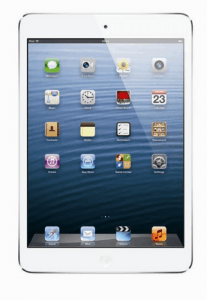
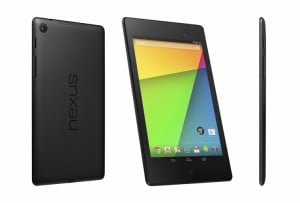
Nexus 7(2013) vs iPad Mini 2

A lot many tablets are coming into the arena, thereby increasing options for the customers. We think it is time to compare a few and determine the best choices. Let us have a comparative look at the Apple iPad Mini 2 and the Google Nexus 7 (2013):
ipad-mini-2-in-indiaBuilt: The dimensions of iPad Mini 2 are 135 x 200 x 7.5 mm and it weighs about 331 and 341 grams (Wi-Fi only and Wi-Fi + cellular variant, respectively). Where as, the dimensions of the Nexus 7 are 120 x 199 x 8.65 mm and it weighs approximately 290 grams and 299 grams (Wi-Fi only and 32 GB + mobile data variant, respectively). Both of them are pretty handy and none of them feels like a weight to carry around so it’s a tie.
Display: iPad Mini 2 offers a 7.9 inch display with a resolution of 2048 x 1536 and a pixel density of 326 ppi which is better in all aspects as compared to the Nexus 7 (2013)’s 7 inch touch display with a resolution of 1920 x 1200 pixels and a pixel density of 323 ppi. Its not about the pixel density and the Retina Display surges ahead of the full HD display.
nexus-7-2013Processor: iPad Mini 2 has been equipped with A7 system chip 64 bit architecture and a M7 motion co-processor. On the other hand, Nexus 7 (2013) has been loaded with a Qualcomm Snapdragon S4 Pro quad core processor clocked at 1.5GHz. It is all about the optimization and Apple surely does it better but there are no two ways to the fact that the Nexus 7 easily matches up to the iPad Mini’s level of performance.
Operating System: iPad Mini 2 functions on iOS 7 where as the Nexus 7 (2013) device works on Android 4.3 Jelly Bean platform. The Android 4.4 Kitkat will be available soon and we’d call it a tie here as it’s a matter of personal choice.
Camera: Both the devices feature a primary camera of 5 mega pixels and a front facing camera of 1.2 mega pixels.
Battery: The Apple iPad Mini 2 runs on a battery powerful enough to offer 10 hours of battery life while the Google Nexus 7 (2013) works on a battery that ensures a battery life of approximately 9 hours.
Price: The rumoured prices of the iPad Mini 2 for the 16GB Wi-Fi variant are expected to start at Rs 28,900 whereas the Nexus 7 32GB variant with LTE will set you back by Rs 25,999 and it is here that it gets a lead the mini offering from Apple finds a bit hard to match.
Our Take: After the careful analysis of the features of these two devices it is safe to say that if you are looking for a value for money, high quality gadget at a low price, then Nexus 7 is a smart choice. However, if you are willing to cough up more cash, iPad Mini 2 will not disappoint you.
, , ,

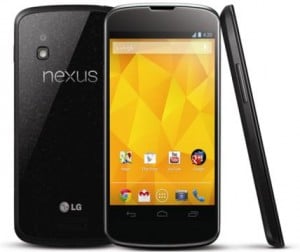
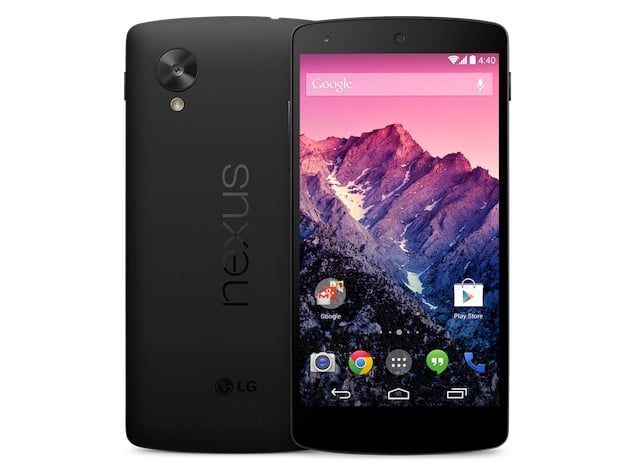
Nexus 4 vs Nexus 5 : Which is better ?

Nexus4-IndiaGoogle’s Nexus 5 is out in the Indian market. While intense discussions about its comparisons with other rival brands are going on, we take this chance to analyze its worth against the predecessor, Nexus 4. Since Google is still continuing with the predecessor, the comparison becomes pretty obvious. Here it is for you- Display- Nexus 5 comes with a 4.95-inch (1080 x 1920 pixels) 445 ppi full true HD IPS capacitive touchscreen as compared to the 4.7-inch WXGA IPS HD (1280x768p), 318 ppi display. While the former has Corning Gorilla Glass 3 protection, the later has Corning Gorilla Glass 2 protection. Hence, its a big leap in terms of display.
Processor, Chipset and RAM- Nexus 5 has  2.3 GHz quad-core Snapdragon 800 processor with 2GB RAM while the predecessor ran on 1.5GHz Snapdragon S4 Pro quad-core processor with 2GB RAM. So, you will surely get significantly better processing experience on the new device as the Snapdragon 800 is the best unit currently.
Memory- 16 and 32 GB internal memory variant come with the new launch while the older one had 8 and 16 GB variants. Both devices have no card slot. Since the newer one offers a bigger memory option, I think this one should go to the Nexus 5.
google_nexus_5Operating System- Nexus 5 runs on Android Kitkat 4.4 platform with many new features. Nexus 4 has been updated v4.3 Jelly Bean platform. However, the Kitkat 4.4 will soon be available to Nexus 4 users. Camera- Both devices have similar 8 MP primary camera and 1.3 MP front camera with features like autofocus, LED flash, Geo-tagging, touch focus, face detection, photo sphere etc. However, the new generation comes with Optical Image Stabilizations) and HDR+ (High Dynamic Range) for better picture quality. The camera is a big up from the previous generation.
Connectivity- Both the devices offer connectivity options like 3G, GPS, Wi-Fi, Bluetooth, NFC, WLAN and USB. However the Nexus 5 comes with LTE support which might be beneficial in future.
Battery- Nexus 5 has Non-removable 2300 mAh battery to give 200 hours of standby and 17 hours of talktime on 2G while on Nexus 4, you will have 2100 mAh battery rated for upwards of 15.3 hours of talk time. Price- For 16 GB variant of Nexus 5, you pay Rs 28,999 whereas the Nexus 4 is selling for around Rs 22,000 for the 16GB variant. You also get the option of a 32GB variant on the Nexus 5 which will set you back by Rs 32,999.
Verdict- Nexus 5 is a significant over Nexus 4 on all counts and is more than worth the price difference. Moreover, this leap comes at no substantial cost escalation. In short, a green light from my side.

Saturday, November 9, 2013

,

Top 5 Instant Messaging Apps

As a wide number of instant messaging applications and services are emerging, staying connected with friends and family from all across the world is becoming even simpler and easier. Let us have a quick look at the top 5 instant messaging apps and determine which one is the best for you:
WhatsAppWhatsApp: WhatsApp is an instant messaging app that uses your phone contacts only. It will display all those contacts that have this app installed. There is no need for you to login. The app saves all your messages offline. WhatsApp is free of charges to download; however, it comes with some in-app purchases. For the first year, your can use this app for free. But after that you will have to pay Rs. 65 every year. Though the fee is not much, but it makes the fully free rivals of WhatsApp even more attractive. Also, you cannot use this application on multiple devices.
wechatscreenWeChat: WeChat is a free instant messaging service that has been introduced this year and is already quite popular. It enables you to send voice messages and carry our Live Chat and video calls. This app is available on Android, iOS, Windows Phone, Nokia S 40 and BlackBerry OS as well. You can link WeChat to your computer with the help of QR codes and chat with friends on desktop browser. With this instant messaging service one can also send files to their device. With the Web Grab plug in, you can shake web pages from your desktop device to your smartphone. It also makes use of your phone number. However, it gives you the freedom to approve request before someone can chat with you.
line-messenger-480x300Line Messenger: Line Messenger is a Japanese based instant messaging app that has been available very recently and works on Android enabled phones. It also functions on BlackBerry, Nokia and iPhone. Line Messenger enables you to send text as well as voice messages. With Line Messenger the user can also make free calls. This is the major reason behind its huge success. This app also allows you to share data, such as photographs and videos with your friends. Line Messenger is free of cost.
Hike-messengerHike: Hike is another immensely popular and widely used instant messaging application. It is simple to use, fast and elegant. Hike enables you to communicate in three different ways. First, it allows you to message Hike-to-Hike. Second, you can send messages to friends who are not using Hike but have a smartphone. However, it is limited to India. Third, you can contact friends with some other phone via SMS. You get free 100 messages every month. Hike enables you share data as well. It comes with a friendly user interface. Hike is also a cross platform service.
BlackBerry-MessengerBBM: BlackBerry Messenger or BBM instant messaging service is perhaps one of the main reasons why BlackBerry devices are so successful. BBM offers superior security and privacy settings as compared to any other instant messaging app. It makes use of user ID or PIN instead of phone numbers. So, this app enables you to authorize people in order for them to chat with you. Therefore, nobody who simply has your contact number can message you. The good news is that BBM has recently been launched for Android and iOS as well. Being a cross-platform service, it will surely become even more popular.
Our Take: After having a good look at these top 5 instant messaging services, my vote goes in the favor of WeChat because as compared to other apps, it is available on maximum platforms. Moreover, it offers some pretty awesome features along with better security and privacy settings. But it has some glitches and Whatsapp provides a decent alternative to it as well. 

Sunday, October 6, 2013

, , , ,

The Real Deal Behind Nokia Lumia 925 And 625 Exchange Offers

Since times immemorial, Nokia has been one of the most trusted mobile handset brands in India. It is known as much for its dynamic pricing tactics as for top notch, durable handsets. However, recently something transpired on the marketing communication front which makes the claims made be Nokia look fishy. 

In order to match up with the schemes offered by rest of the smartphone makers and to boost the sales during the festive season, the company has brought out exchange offers on its Nokia Lumia 925 and Nokia Lumia 625, arguably the most popular smartphones by the Finnish maker. According to this offer, if you exchange your old smartphone for either of the above mentioned two smartphones, you can get a discount of up to Rs 10,000 on the former and up to Rs 7,000 on the later one.

Nokia Buy Back Offer India

If you go by this calculation, you may get the Nokia Lumia 925 for Rs 28, 529 and Nokia Lumia 625 for Rs 14,919, depending upon the valuation of your old smartphone. The fishy part here is that in this scheme, the original price of these smartphones is considered to be their MRP but it is needless to say that these phones are rarely sold on the MRP. You can get these phones on many online as well as brick-and-mortar stores for as much as 20 percent discount to the MRP. Hence, the whole scheme is exaggerated to lure customers with a luscious discount value. 

The Lumia 625 can be bought for around Rs 15,500 from the market whereas the Lumia 925 can be bought for around Rs 29,500. If you see, Nokia is offering a discount you'd be better off without. 

Our Take: Nokia however, is not the only one to have such schemes. In case you have your old smartphone and you are considering buying a new one in its place, we suggest you not to let someone else decide the price of your old smartphone. You better bargain for the old device separately and then look for some deal for a new phone.
Original Article 

Sunday, September 1, 2013

,

4G India: Reliance Jio, TranSwitch, Rancore, Airtel, Tikona, Google, Videocon, Nokia

India-4GThis week’s biggest 4G news is Reliance Jio Infocomm has applied for unified license to offer any type of communications over its 4G/BWA spectrum won in 2010. That means Reliance Jio can offer voice and messaging services as well as data services over its 20MHz of 2300MHz spectrum.
Govt recently has come up with unified license policy to open up new opportunities to telecom sector of the country. The new policy will delink the spectrum from the license to offer different services. Reliance Jio, a subsidiary of Reliance Industries will pay Rs 1,658 crore to the department of telecommunications to get unified license.
There are another two companies applied for unified licenses. One is probably Tikona Digital Networks.
Reliance Retail Grows
Reliance Industries’ retail subsidiary Reliance Retail has become the country’s topmost retail chain. Earlier country’s retail market was dominated by Future Group. I earlier predicted that RIL may use its Retail chains as launchpad as well royalty programs for promoting its 4G products. It seems RIL is going this way.
Rancore Associates with TranSwitch
Rancore Technologies, the technology and development arm of Reliance Jio Infocomm has announced a deal with TranSwitch, a global leader in IC production. TranSwitch provides innovative integrated circuit (IC) and intellectual property (IP) solutions, which help the customer and network infrastructure segment in delivering core functionality for video, voice and data communication equipments.
Rancore will use TranSwitch’s Atlanta 80 communication processor to launch Reliance’s next generation broadband services. The processor will enable Rancore’s new analog terminal adaptor (ATA) to support multiple services and applications simultaneously, including 4G high-speed data and high quality Voice over LTE (VoLTE) (Long-Term Evolution) without undermining performance. Additionally, the processor will offer 100 Mbps wire speed router throughout for Ethernet frames and will support virtual private network (VPN) services as well.
Airtel 4G may be in Delhi by Next Month
Country’s largest mobile operator and first 4G-LTE operator, Bharti Airtel continues expanding its 4G market, as Delhi is probably their next 4G market. If all go right, Delhi, country’s one of the most lucrative data market will get Airtel 4G by September.
Google Digital to Buy Shares in Tikona
There is strong rumor in the market that Google is looking to enter India’s high-potential-but-yet-to-mature data market. As per reports by EconomicsTimes Google Capital is in talks with Tikona Digital to buy a stake. Tikona has 4G licences in Gujarat, Uttar Pradesh East and West, Rajasthan and Himachal Pradesh.
The publication also reported that Yahoo and Microsoft are also showing interest to buy shares in Tikona. But officially no one confirmed this development. If Google-Tikona deal materializes, it could change India’s digital landscape considering Google’s Fiber services in United States. However we guess it’s very early stage to forecast anything.
Videocon 4G by March 2015: Promises Ultra Cheap Data
Videocon mobile services is in an advanced stage of discussion with Nokia Solutions and Networks (NSN, earlier Nokia Siemens Networks) to roll out 4G services. Videocon has 5 MHz spectrum on 1800MHz band in 7 circles and will use FDD-LTE technology to offer 4th generation high speed internet access over this band. Videocon expects to start roll out of 4G services by the end of this financial year in a phased manner city by city based upon the market potential.
“We are known for providing value for money to customers. Our tariffs for 4G will be among the lowest in the country,” said Arvind Bali, director and CEO, VTL.
Huge 1800MHz Spectrum Sale Coming: FDD-LTE Dominance?
Govt of India is in plans to put up 285 MHz spectrum of 1800 MHz in next auction as Supreme Court asked to sell all spectrum released by February 2012 license cancellation.
However 285 MHz spectrum is available separately across 22 circles. But with unified spectrum and license policy many operators are definitely use this band for rolling out 4G services. Idea and Vodafone, major telecom players without any BWA spectrum may look into it. Globally LTE-FDD over 1800MHz accounts for more than one-third of total LTE roll out; hence ecosystem is better than any combination.
Nokia Readies for 4G in India
Nokia is gearing up for upcoming 4G device market in India. Globally Nokia has launched several 4G smartphones – but those handsets are compatiable with HSPA+/DC-HSPA+ or FDD-LTE technology. But Indian 4G operators are using LTE-TD technology. It seems that Nokia is in talks with Indian 4G operators to bring LTE-TD smartphones.
Recently the company launched two new Windows 8 smartphone – Lumia 925 and Lumia 625. Nokia, the fallen king before Android dominance is offering EMI and buy back options to promote Windows Phone 8 smartphones. Nokia’s Lumia 520 becomes cheapest WP8 smartphone at Rs 8500 approx.
Micromax, Karbonn, Lava/Xolo – 4G Device Market will have Many Choices
Karbonn Mobiles, another Indian handset company has expressed its plans to bring 4G devices to Indian market. Earlier Micromax and Lava (and its premium sub brand Xolo) also cleared the fact they will not leave no stone untouched and will eventually bring 4G/LTE devices as the ecosystem becomes stronger. With attractive pricing in a price-sensitive market domestic handset companies are putting international brands like Samsung, Nokia, LG, Sony in a tough turf.

Original Article 
, , , ,

Nokia Promises Its Amber Update Will Come To All Windows Phone 8 Lumia Devices By The End Of September

2013-08-30_09h54_52
Today Nokia promised owners of its Lumia Windows Phone 8 devices that its “Amber”update will reach all phones by the end of September. The Amber upgrade is a mix of feature improvements that will improve Nokia’s handsets, further setting them apart from devices built by other smartphone OEMs.
Amber contains a photo-editing tool, improved image processing, the ability to snag motion in sequence with “Action Shot,” the acceptance of double-tap input to wake the phone, and improved internal storage reporting.
However, the most important new piece delivered by Amber is “Glance Screen,” a tool that makes your phone’s inactive state more interesting. When your handset is inactive, it will display a clock and battery information. So, you can more quickly interact with your phone without having to do anything at all. You can turn off Glance, of course, or have it switch off after a set amount of time.
In past years, we would now discuss how Amber puts Nokia ahead of Samsung, HTC, and other Windows Phone OEMs (remember Dell?). We don’t have to do that anymore, as Nokia control sessentially the entire Windows Phone market. Thus, the changes are not as much changes to Nokia’s Windows Phone handsets as they are adaptations to the Windows Phone platform itself. Given that Nokia sells nearly 90 percent of Windows Phone devices, any changes that it makes become de facto official changes.
This is a problem for Microsoft, as it initially ceded flexibility to make changes to Nokia in partial exchange for it adopting the platform. This saved Microsoft’s mobile life, but in the process cost it control: If Nokia can essentially skin Windows Phone to its own contentment, Microsoft is in a material way not in charge of the Windows Phone user experience and design.
I doubt that sits well in Redmond. Thus, Microsoft either builds a phone itself (there have been rumors), or it bolsters HTC (the only remaining OEM partner with more than a scrape of market share that isn’t Nokia) to get a better grip on its platform.
Whatever the case, if you are a Nokia handset owner, the Amber update will be rolling out depending on your handset and country and likely carrier over the next month. Get ready.

Original Article 
, ,

Microsoft’s Next CEO Will Not Spin Off Xbox, Unless They Abdicate The Company’s Larger Strategic Direction

2013-08-30_14h39_51
A story published by Bloomberg floats the idea that Microsoft might spin off its Xbox business, which it calls “more likely [following current CEO Steve Ballmer's] exit.” The publication values Xbox at around $17 billion, a figure based on a comparative revenue multiple with Nintendo.
This is precisely the sort of bilge that cavorts and pretends to be serious analysis. The Bloomberg piece leans on the words of a fund manager, Todd Lowenstein, who claims that Xbox “looks like an attractive standalone business that could hold up on its own.” He continues that it “seems like it would be the most mature candidate with the best growth potential and the most established to stand on its own.”
You could argue that Xbox is currently undervalued inside of Microsoft. However, that potential is not exactly material. Presuming for the moment that the $17 billion figure is reasonable, Xbox as a group would represent 6.1 percent of Microsoft’s current market capitalization, a slim segment.
Presuming a 50 percent lower market valuation while under the aegis of the larger Microsoft corporation (the tax of being part of Microsoft, the value that could be unlocked), Xbox could represent $8.5 billion in lost value to investors. That’s about 3 percent of Microsoft’s worth. So, the potential upside isn’t too great.
The potential downside, however, is hilariously large.
Key Platform Plank vs. Un-Lucrative Short-Term Financial Ploy
Microsoft could spin off Xbox, reap a short-term financial gain from the transaction, and return that money to shareholders via stock buybacks or a special dividend. The former would have a small, but real long-term impact on Microsoft’s earnings per share, perhaps leading to a higher per-share value in the future. The latter would be a waste, as a previous Microsoft special dividenddemonstrated.
So, Microsoft would gain little from the deal as a company, even though institutional investors might enjoy a special dividend boosting their quarterly numbers. That’s nice, but not what Microsoft lives to do. In fact, Microsoft’s job is not to worry about the spreadsheets of external financial entities, but instead to build great products, grow new platforms, make oodles of money, and take care of its employees as it does so.
Therefore, the short-term potential financial gain is not core to what Microsoft needs to worry itself with.
Does the idea of spinning off Xbox make product sense? No it does not. At all. Microsoft is working around the clock to expand the Windows platform to every screen that you view, from the desktop, to your laptop, tablet, phone and, you guessed it, your television.
Windows on my TV, you might think, I don’t want that! Chill fam, it’s fine. What Microsoft is up to is simple: A common set of APIs and foundational code called the Shared Windows Core will underpin all Microsoft platforms. It’s in Windows 8, and Windows Phone 8, and is also present in the forthcoming Xbox One.
As the traditional PC market declines, Microsoft is endeavoring to extend its Windows software to work everywhere. And Xbox is core piece to this gambit, which is a bet that developers matter, and that as a company Microsoft needs to cater to them.
Essentially, Microsoft wants to create a single mega platform, one in which any developer with a shared code base can reach consumers and companies on screens of every size: Tablet, phone, laptop, desktop, and TV. No company offers that, and HTML5 is far from reaching the point in which it can deliver anything similar.
Now, why does Xbox matter for Microsoft? It matters as it has high levels of developer support at the Triple A tier – think ‘Gears of War’ and that sort of game. Xbox has a subscription revenue system that is a key part, and has been a critical antecedent to its new services strategy. And, finally, Xbox allows Microsoft to offer music and video to a family across quite literally all their devices.
If Microsoft were to sell off or spin off or otherwise cut ties with Xbox, which, by the way, makes utterly no sense under the current reorganized structure — it would cede the living room to third parties. The company is not willing to do that. Just as it was not willing to fail in search, or mobile.
–
So the financial upside of the deal isn’t large enough for Microsoft to particularly care, especially given its ample — if mostly foreign — cash reserves. And the exit of Xbox would tear at the fabric of its company-wide plan to unite all screens under the Windows flag.
Sacrifice the end-game of Windows for the potential of a few billion in shareholder equity? No.

Original Article 
,

Following Mobile Test, Facebook Tries Out A ‘Trending’ Section On Its Desktop News Feed

facebook trending topics
Back in June, Facebook said it would be rolling out a number of features for following public conversations, and it looks like the company’s holding true to that promise.
Specifically, the company is testing a section highlighting “Trending” topics that appears alongside its desktop newsfeed. The Wall Street Journal first reported on the test, and it included a screenshot (which you can see to the left) that looks pretty much as you’d expect — a box with a list of linked topics.
A Facebook spokesperson sent me the following statement:
We are running a small test of a unit on News Feed that displays topics currently trending on Facebook. Right now it’s only available to a small percentage of US users and it is still in the early stages of development. We will share more details down the line if we decide to roll it out more widely.
Facebook has been moving towards something like this for the past couple of months. It launched searchable hashtags in June, and those are all about making it easy for people to see related conversations around a single topic. At the time, the company said it would be “rolling out a series of features that surface some of the interesting discussions people are having about public events, people, and topics.” Then, earlier this month, it started showing trending topics to some mobile web users.
Trend-based navigation is a pretty natural outgrowth of adding hashtags, so it might seem strange that Facebook is taking a while to go from one to another. However, public-private dynamics can work pretty differently on Facebook than on Twitter (where the hashtag/Trending Topics ideas were popularized), so I imagine Facebook is using tests to make sure this approach makes sense with its more private model.